Chancy.AI
Facts, just the facts, and nothing but the facts.
Cited analysis from academic and scientific sources.
The Knowledge Doubling Curve
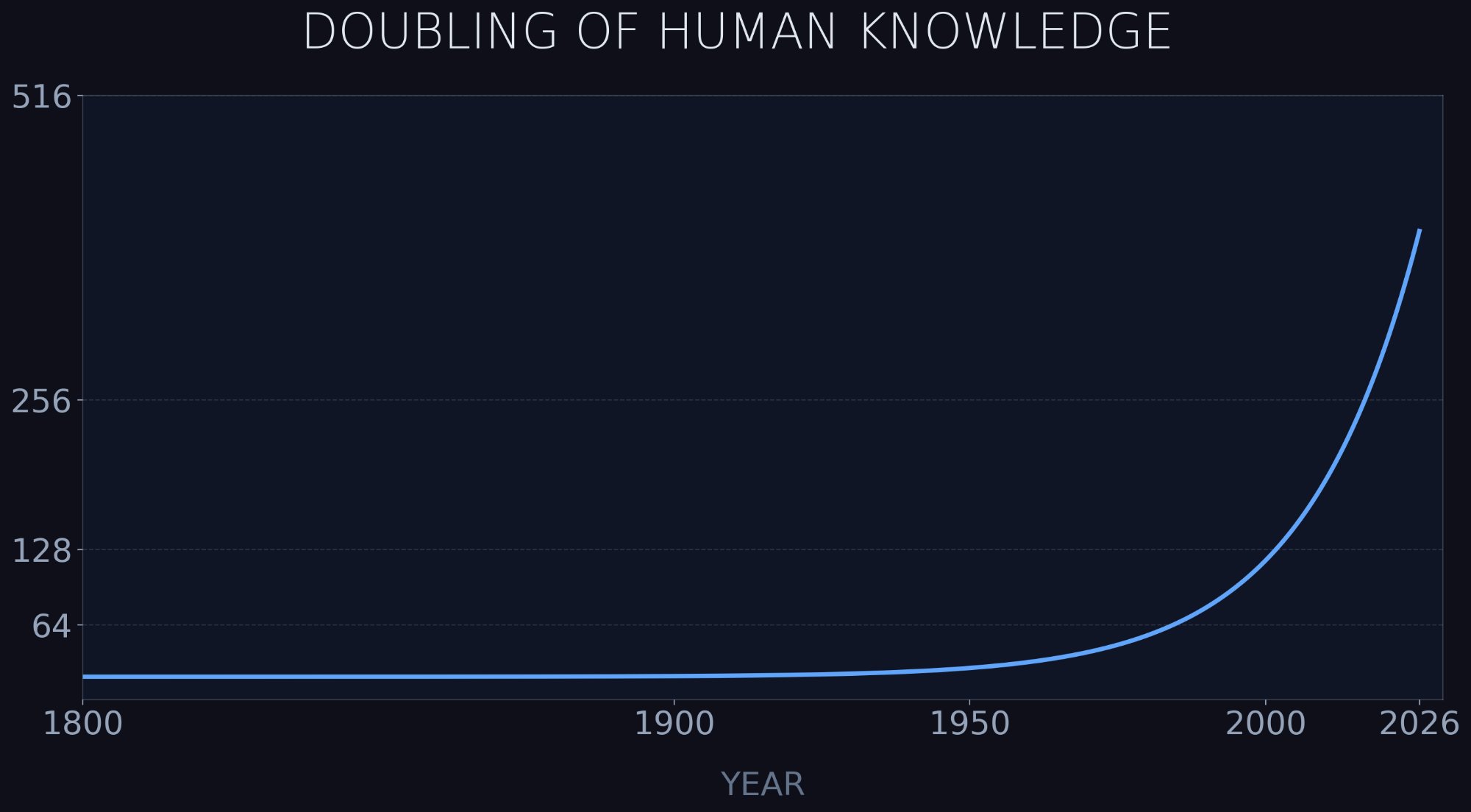
Throughout history, human knowledge doubled every century until 1900. By 1950, human knowledge doubled every 25 years. By 2000, knowledge doubled every 5 years. Today, human knowledge is doubling every 13 months.
"The exponential growth in information creation presents both opportunities and challenges. While we have access to unprecedented amounts of data, the ability to process, analyze, and extract meaningful knowledge from this information becomes increasingly critical."
—Chancy.AI